Tuesday, June 21, 2016

Mozart, Ethan Bortnick and American Rhythm

Charlene Baldridge
Photo by Ken Howard
Mainly Mozart Festival 2016 Concludes

Moving right along, circumstance dictated going alone to the June 15 Mainly Mozart Orchestra concert at the Balboa Theatre. I drove to Broadway Circle early in order to secure free street parking in advance of the 6:30 “Overture.” Most edifying, the concert preamble consisted of individual players from the Mainly Mozart Youth Orchestra mixing it up with individual All-Star Orchestra players, such as concertmaster William Preucil, in chamber quintets, quartets and trios. A wonderful experience for the kids, whose families were present in the auditorium, which is perfect spot for chamber works.

William Preucil
In the concert that followed Maestro Michael Francis led the orchestra and guest soloist, the much acclaimed, much recorded Canadian violinist James Ehnes (in Mozart’s Violin Concerto No. 1 in B-flat Major and Franz Schubert’s Rondo in A Major) and the orchestra in other early works by Mozart (Overture: “La finta semplice” and Symphony in D Major “Il Sogno di Scipone”) and Schubert (Symphony No. 1 in D Major). It was gratifying to see so many kids and families remain for the concert by this pre-eminent soloist and orchestra, which Mo. Francis proclaims the best in the world.
Maestro Michael Francis


Ehnes is on world tour in celebration of his 40th birthday this year. He is very fine, and he and Francis, of an age give or take a year, made an attractive duo when they took their bows, looking like two succulent peas from the same pod, tuxedo-clad and bursting from their confines. They and the orchestra were so attuned that there was no lag at all between Ehnes’ deliciously clean cadenzas and the ensuing orchestral entrances. It was a magical partnership to say the least between two enthusiastic, personality-filled colleagues.

Another of those rare suspension-of-breath moments came late in the orchestra’s rendering of the Schubert Symphony, which Schubert wrote in 1813 when he was 12. There’s a subtle, yet abrupt, change in time signature from a rather martial cadence to duple time, and at that moment and in the ensuing bars, the orchestra grew hushed and so did the audience: magic.

The inspired programming of this particular concert allows us to explore and compare the development of two prodigies, Mozart and Schubert, in works composed when they were 12-17 years of age.

Ethan Bortnick’s The Power of Music

Ethan Bortnick, who persuaded his parents that he needed piano lessons when he was only 3, is by now a very talented young man at an exceptionally awkward time in his life. At 15, his face has yet to grow into his jaw and many of his movements, especially when he bows, are ungainly, certainly common to one of his years, charming in its way, but irksome over the course of a self-hosted evening’s entertainment. I know he has a singing coach. I wonder if he would consider a movement coach. He also needs a script so that his patter is not so repetitive.

Ethan Bortnick
Right now Bortnick is much more the pianist and composer than the pop vocalist. Because his voice is changing, he isn’t able to engage in full-out vocalism that would allow him to sing as though he loves to sing. 

Nonetheless, he is much the showman – a segment where he calls audience members to the stage and composes from their ring tones was particularly enjoyable – and he is at ease with the audience, who seemed to have a rip-roaring good time. His four-member backup band (keyboard, percussion, guitar and bass) is excellent, and the three who sang have beautiful voices. Bortnick also utilized the San Diego North Coast Singers, with whom he performed the evening’s closing number, “We Are the World.”

The Closing Concert of the Orchestra Series

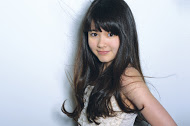
Gavin George
The final concert in the Mainly Mozart Festival featured impressive 12-year-old pianist Gavin George, whose playing of Mozart’s Piano Concerto No. 5 in D Major displayed mature aplomb. It was rife with facility as well as budding spiritual understanding. His encore – Rachmaninoff’s Prelude Opus 23, #5 – showed both unabashed bombast and a love of melodic beauty.

The program began with Maestro Francis and the orchestra’s amusing performance of Leopold Mozart’s Cassation in G Major (“Toy Symphony”), replete with airs by lovesick cuckoos and toy trumpets, a drum, bells and whistles and ratchet. Leopold was Mozart’s father. The performance was good-naturedly performed by soloists from the ranks of the orchestra.

Maestro Francis and the Festival Orchestra
Other explorations included Mozart Symphonies No. 2 (unprogrammed but included as what Maestro described as a “palate cleanser” prior to what followed the Cassation), Mozart’s symphonies No. 5 and No. 52. The program concluded with a thrilling reading of Mendelssohn’s Symphony No. 1 in C minor, written when he was 15. Here there was applause between movements, and as my learned friend observed, it was justified because the conclusions of each movement were electrifying.

American Rhythm

Seen Sunday afternoon (June 19) at Lamb’s Players Theatre, Coronado

The Company of American Rhythm
Photos by Ken Jacques


I remember this piece from 2000 when Lamb’s first presented it, a survey of everything living musical and historical thing (well, not quite) from Tin Pan Alley to the present. It aspires to tell the story of the last century in the U.S.A. up to the present without bias or comment, illustrated with music. Now, as originally, it changes its mind and becomes something else after bogging down in the Dust Bowl and the ensuing Great Depression, and at last becomes more of what it should have been all along – lots of talent, performing and dancing to music that spans the century and more.

American Rhythm was conceived originally by Lamb’s Artistic Director Robert Smyth and commissioned of Kerry Meads and Vanda Eggington, both involved still as director and musical director. It now has new choreography by Colleen Kollar Smith. At nearly three hours, it’s still way too much for one music lover to endure, even one with a generously padded rear. There’s no doubt about it, though, the assembled company of ten – familiar and new – plus a fine 7-piece band, the songs, and their intelligent execution and arrangements are a wondrous glut. Veterans include Sandy Campbell, Catie Grady, Siri Hafso, David S. Humphrey, Luke Harvey Jacobs, Benjamin Roy, Lance Arthur Smith and Joy Yandell. Those making their Lamb’s debuts are Kiana Bell and Michael Cusimano.


The production plays through August 7 at Lamb’s Players Theatre, 1142 Orange Avenue, Coronado. www.lambsplayers.org or 619-437-6000.

Introducing the 2016 Fringe

Monday night, I attended the press preview of the San Diego International Fringe Festival (June 23-July 3 at various locations), two-minute snippets of around 50 of the groups presenting more than 400 50-minute performances of plays, music and dance this year. Tickets are only $10, and a complete schedule may be found at www.sdfringe.org. Better yet, a public preview ($5) takes place tonight at 7-9pm at the Readers Spreckels Theatre, 923 First Avenue. https://sdfringe.ticketleap.com/festival-previews/


Tuesday, June 14, 2016

Mainly Mozart Festival Continues


Charlene Baldridge
Photo by Ken Howard
Mainly Mozart Festival Continues

We’re deep into the Mainly Mozart Festival season right now, and having attended the “conductor-less” performance June 8 (longtime concertmaster William Preucil led the Mainly Mozart Festival Orchestra from the violin) I can assure you it was magnificent; that is, if one overlooks the annoyance of applause between movements.

Regular Mainly Mozart audiences are sophisticated, so this interruption seldom occurs during performances in other series, but the orchestra series is held at the Balboa Theatre and there are lots of seats to fill, so they offer deeply discounted tickets through some of the ticket outlets, thinking to serve those who could not otherwise attend or those not inured to chamber music and its customs. Irritating as this can be, I’d rather have them there applauding between movements than not there at all.
William Preucil, concertmaster


Wednesday’s concert was well attended and afforded the opportunity to hear more music from Mozart, (Symphony No. 25 in G minor, written at 17), Franz Joseph Haydn (Symphony No. 39, also in G minor), and Felix Mendelssohn (Concerto for Violin and Piano in D minor, written at 13).

Esteemed and powerful pianist Anne-Marie McDermott, long a fixture at Mainly Mozart and curator of the Mainly Mozart Spotlight Series, performed solo duties in the Mendelssohn along with Preucil, who possesses a ravishingly beautiful sound. He was seated adjacent to her and in front of the 59-member chamber orchestra, top rank players gathered from around the country. The idea that something so fine could be achieved without the customary arm waving is edifying to say the least.


Maestro Michael Francis
We returned Saturday, June 11, for the juxtaposition of Mozart (Divertimento No. 4 in B-flat Major and the Mass in C minor “Orphanage,” written when Mozart was 12!) with another composer who was also a prodigy, Camille Saint-Saens (Piano Concerto No. 2 in G minor). Soloist was Adam Neiman, one of my favorite pianists among those presented since Mainly Mozart’s inception 28 years ago. The program was conducted by Michael Francis, in his second year as music director of the Mainly Mozart Festival. Francis and Neiman provided a lively pre-concert talk about prodigy as it applies to Mozart and Saint-Saens, who played his first concert at age 10. The lecture was made especially interesting by the fact that Neiman, too, was a piano prodigy who began lessons at 5 ½ and by age 10 was performing 50 engagements a year. As a boy he loved Debussy and was also influenced by lying under the piano as his mother, a professional pianist, practiced Prokofiev’s 2nd Piano Concerto. Nonetheless, Neiman said that Mozart is his first and truest love.
Adam Neiman

Neiman received a standing ovation for his dazzling, intelligent performance of Saint-Saens’ fierce, intense concerto. He rewarded the audience with Chopin’s “Raindrop” Prelude in D-flat Major, a perfect way to return us to earth.


San Diego Master Chorale was featured in the Mass in C minor, which is awe-inspiring aside from the fact that Mozart was only 12 when it was written. His genius for vocal writing was already evident, especially in the duets for soprano (Yetzabel Arias) and mezzo-soprano (Kara Sainz). The other soloists were tenor Steven Soph and baritone Lee Poulis. They were not a hugely distinguished lot, but adequate to the task.

This marks the first year of Maestro Francis’s six-year exploration of Mozart’s prodigy. As we move through the six years, the works will become more mature. Asked what would come after the six yeas are traversed, he remarked, “Perhaps we’ll love it so much we’ll do it all over again.”

So far so good.

The Other Mozart

June 12 the Mainly Mozart Festival presented The Other Mozart, a one-woman play written and performed by actor, playwright and producer Sylvia Milo. It’s about Maria Anna (Marianne), Mozart’s slightly older sister, nicknamed Nannerl. Both before and after its 2012 New York premiere off-off Broadway, the work toured. It has garnered ecstatic reviews from The New York Times and others. The site of the New York production, the Here complex, has numerous venues, the largest of which, at least so far as I can determine, seats 150 theatregoers. The Balboa Theatre seats 1,339. The performance here was a case of mismatched venue and vehicle. But the Balboa is what Mainly Mozart has to offer.
Sylvia Milo as the other Mozart


My experience of spoken word in the Balboa, even amplified, leads me to believe the venue diffuses the sound (as in the recent Mainly Mozart performance of Mozart’s Bastien und Bastienne) and renders it well nigh unintelligible. Though gently miked, Milo’s voice and intelligibility quotient (perhaps 50 percent) was additionally compromised by constant background music (billed as by the Mozarts – I’m unaware that any of Nannerl’s music survives – and contemporary composers Nathan Davis and Phyllis Chen), and the actor’s dialing down of vocal volume for dramatic effect. Thus, my enjoyment of The Other Mozart was severely hampered and despite the darkness I wanted nothing more than a copy of the script.

As opposed to the recent, entirely fictional French film Mozart's Sister, Milo constructed her play from research, mainly surviving letters from Mozart to his sister (“Nobody saved my letters,” she says plaintively) and newspaper accounts of the road trips Nannerl and her brother Wolfie (Wolfgang) took, showcased by their father Leopold. It was hoped that Wolfgang would eventually secure a court position remunerative enough that it would support the family, something Leopold had been unable to do.

Nannerl, whose keyboard skills were said to exceed her brother’s, was on the road only until she hit marriageable age, and then, due to the mores of the times, she stayed home learning the arts that would sustain her as a wife and mother, which indeed she became. Her gravestone identifies her as the sister of Wolfgang Amadeus Mozart.

The dancer-like Milo performs in her chemise upon an immense period dress that is the only set piece. It is full of numerous pockets from which she draws prop letters, a toy piano, teacups, and other accouterments that assist in the poignant storytelling. The climax of the play occurs when she puts the dress on and is unable to move – a metaphor in itself. The concept is brilliant, as created by the Little Matchstick Factory and directed by Isaac Bryne.

Someone asked me recently if the real W.A. Mozart was as frivolous and annoying as the one limned by Peter Shaffer in his 1980 Broadway play, Amadeus. The idea is suggested in part by Mozart’s letters home. I said I thought not; that was just Shaffer’s device to underscore Salieri’s amazement that such divine music could come from so asinine a human. (In reality the two composers hardly knew one another.) My theory that Mozart was not so extreme, that his more puerile character attributes were created for dramatic effect, has been supported by scholars and by the New York Times obituary of Shaffer, who died last week at 90.

First Folio Activities

On a theatrical note, I ventured to the Main Library Monday night to hear Old Globe Artistic Director Barry Edelstein  and guest director Brian Kulick of the Classic Stage Company in New York deliver a talk titled "Shakespeare on the American Stage: The Director and the Text." Kulick talked about his production of Macbeth, which opens in previews on the Lowell Davis Festival Stage at the Old Globe this week. The production is set in the aftermath of WWI and offers numerous other surprises.

Saturday, June 18 from 10am to 1:30pm is 
Globe Family Day, a free event at Copley Plaza, which includes music, crafts and storytelling for Shakespeare fans of all ages. No tickets or reservations required. Included are tours (ages 9 and up) and for the even younger kids, a free program (tickets required) titled "Have Fun With Hamlet" at 10:30am in Hattox Hall. Go to FirstFolioSanDiego2016.org or phone (619) 23-GLOBE.

Shakespeare's First Folio is on display at the Central Library through July 7. San Diego is the only location in California at which the exhibit may be seen. It is free. Timed tickets are required. Make reservations at the above web site.


Monday, June 6, 2016

Guthrie, Mozart, Gabler Über alles

Charlene Baldridge
Photo by Ken Howard
Guthrie.Mozart.Gabler 

Classics all, plus my first Über experience

The Padres were in town Friday night, and I was scheduled to see Woody Guthrie’s American Song at the Horton Grand Theatre. California being “the garden of Eden if you got money” (Guthrie), I decided that rather than fight for parking or indulge in the hassle of parking in the structure across the street from the theatre, I would have my first adventure with Über, the raison d’etre for my new iPhone. As it happened, I was not the only one. After the performance there were several other theatregoers waiting for the on-call car service. All very civilized, of course.

I went to the Gaslamp in a Mercedes and came home in a town car. Both drivers helped me into and out of the vehicle and both were bright and intelligent. No hassle. Way to go.

I went down at 5:30 for the 8pm show, thinking to visit a little Thai restaurant I know at the end of 4th, only to find that it and a whole row of restaurants there had gone out of business. Another sadness: the Old Spaghetti Factory is now a pool hall. How things change when you’re 82. A thousand pardons. I was on 4th. The Old Spaghetti Factory, as always is on 5th! A lot of things DO change when you're 82!

My late husband and I used to take the kids there for spaghetti when they were little. It was the only place to eat in the Gaslamp District (not sure what we called it then) and the Horton Grand didn’t yet exist, at least not in the present location. “Street People” (that’s what we called them) offered to guard one’s car, for a fee, and a woman alone would never go to that part of town.

Things are changed now, though a longer walk than anticipated ensued. I was sent on a wild goose chase to a closed restaurant recommended by the door guard at World Market; then proceeded to a little outdoor table at Rockin’ Baja Lobster in the 300 block of 5th Ave. From there, I watched the world go by, many on their way to the Padres game, others just enjoying the balmy evening and drinking beer and enormous margaritas.

Intrepid's Woodie Guthrie
French, Storti and Yael-Cox
Photoa by Daren Scott


Back to the Horton Grand for (guest theatre in residence) Intrepid Theatre’s production of American Song, which was conceived and adapted by playwright Peter Glazer in 1988 and is directed by Ruff Yeager with music direction by Jon Lorenz.


Leonard Patton

Karen Anne Daniels

The company of five includes Intrepid Artistic Director and Co-founder Sean Yael-Cox (in his element) as Folksinger/Mid-life Woody. He wields a mean vocal twang and some fine licks on guitar. Leonard Patton, a wondrously rich singer, portrays Writer/Older Woody. Jack French, a handsome youth who identifies as an opera singer (not) in his bio (!), portrays Searcher/Young Woody. 

Sean Yael-Cox
Set in America in the ‘30s and ‘40s, the piece loosely follows Guthrie’s travels through the Dust Bowl and with the great westward migration that followed. It presents 26 songs (among them the hit for which Guthrie will always be remembered, “This Land Is Your Land”) interspersed with Guthrie’s amazingly timely writings about America, the life he lived, and the people he met.

The Women are played and sung by Karen Ann Daniels and Megan M. Storti, whose voices blend magnificently and whose chemistry is exceptional. Most all the performers grab a guitar at one point or another. There is no story, and the road looms large.

Onstage backup is provided by Sean LaPerruque on fiddle, Patrick Marion on bass, and Jim Mooney on guitar and other instruments. Musically it doesn’t get better than this, especially if you’re a Guthrie fan. Michael McKeon provides the multi-leveled set and projection design, Jeanne Reith, the costumes, and Christopher Renda the lighting. Matt Lescault-Wood’s sound design is impeccable.

The show plays Thursdays-Sundays through June 19 at the Horton Grand, 444 4th Avenue. Tickets at Lamb’s Players Theatre www.lambsplayers.org or 619-437-6000.

Mainly Mozart Festival

Saturday around 6pm  I drove to Broadway Circle, where I scored a yellow, arriving at the Balboa Theatre in time for Music Director Michael Francis and opera director Cynthia Stokes pre-concert chit-chat, which was informal, warm and amusing as they talked about the prodigy of Mozart (1756-1791) and the opera singspiel that he wrote at age 12, titled Bastien und Bastienne. By then a “seasoned” opera composer (he wrote his first opera at age 8!) the opera, which lasts less than an hour, contains the seeds of much he later wrote and shows his early understanding of the voice and vocal writing.

It’s interesting to note that the overture to Bastien und Bastienne takes as its theme a melody from Beethoven’s (1770-1827) “Eroica” symphony. Wags assume the explanation is that each of the composers lifted the melody from something else. Also interesting to note, each prodigy had his father to contend with, fathers eager to perpetuate the money stream generated by showcasing their prodigies. 

According to Maestro Francis, Beethoven’s father was always pushing him to be as talented and popular as Mozart – quite a burden to bear. Logically, then, Francis programmed Beethoven’s Piano Concerto No. 2 in B-flat Major, which was beautifully, almost magically played by 15-year-old Umi Garrett, also a prodigy who began with a splash on Ellen de Generes’ TV show when she was only 8.

Umi Garrett

Ms. Garrett, Mo. Francis and the Festival Orchestra established a fine rapport early in the concerto. She has youth, enthusiasm and grand facility on her side. The magic occurred late in the Adagio movement, when the pianissimo achieved by the orchestra and Ms. Garrett was so extreme that it caused an extraordinary hush in the concert hall. No one moved or breathed.

Clad in layers and layers of tiered ecru tulle, which she took great care to tuck under the piano, Ms. Garrett played an encore, Russian pianist Arcady Volodos’ notoriously difficult and showy concert paraphrase of Mozart’s Rondo Alla Turca. 


To begin the program Mo. Francis programmed Mozart’s Galimathias musicum (Musical Gibberish) in D Major, a showcase of colors and styles in 16 movements, devised by Mozart father and son and written in honor of the inauguration of Holland’s Prince William V when Mozart was 10. It’s truly tongue-in-cheek and sadly no one told the audience it was okay to laugh, though it was in the program note insert that the title translates ""musical gibberish."

Performed by Juilliard singers Christine Taylor Price, Yujoong Kim, and Daniel Miroslaw, Bastien und Bastienne (supertitled arias in German, dialogue in English) is truly a cause for laughter. It’s a parody of the then-contemporary “pure nymphs and shepherds” style comically identified and performed by opera comedienne Anna Russell. Such librettos concern the simple romantic affairs of country folk as opposed to operas composed about royalty and war.


Christine Taylor Price

Daniel Miroslaw

Yujoong Kim


The action was performed in front of the orchestra by the costumed singers directed by Stokes. All three are career-ready with the ripest of them being bass Miroslaw, as the prototype of Cosi fan tutte’s Dr. Mesmer character (Don Alfonso in disguise), the town’s would-be magician who makes everything right. Miroslaw’s vocal technique is near perfect and he has the lanky swagger of a doubtful older man not to be trusted. Definitely a candidate for Mozartean types like Despina, Fiordiligi, and later Strauss’s Countess, Price has the goods. Sadly, she was hampered in her attempt to convey ingénue-like naiveté by a very bad hat and an unflattering costume. As Bastien, tenor Kim, who sings quite well, did not need to be any goofier. But he was. Also sadly, the spoken English dialogue was not decipherable, and one found oneself searching the supertitle spot (for spoken English, blank) for translation. Sigh. Otherwise, a good time was had by all.

The Mainly Mozart Festival continues through June 18, offering four more orchestra concerts and a variety of other fascinating events, some of them free. Check out mainlymozart.org

North Coast’s Fierce ‘Gabler’

Sunday I escaped the Rock and Roll Marathon blockades successfully, achieving I-5 north in time to make North Coast Repertory’s 2 pm curtain of Henrik Ibsen’s Hedda Gabler.

The work is performed in a new translation by Anne-Charlotte Hanes Harvey, whose own play, Dinner With Marlene, was recently premiered by Lamb’s Players Theatre.  Also worthy of note, it’s Artistic Director David Ellenstein’s 100th directorial assignment since he joined NCRT in 2003.

Ellenstein writes in his program note that the concept of translation/language he and his Ghosts company so successfully accomplished informed his and Harvey’s work on Hedda Gabler; that is to say, all had input into their character’s utterance, together effecting the achievement of and hope for something illuminated, something vital and immediate and vibrant, to borrow a few of Ellenstein’s words.

To do this, as he said, required sublimely intelligent and creative professionals. These he assembled in Cristina Soria (Aunt Julie), Rhona Gold (Berte), Bruce Turk (Jörgen Tesman), Mhari Sandoval (Hedda Gabler), Mel House (Thea Elvsted), Ray Chambers (Judge Brack) and Richard Baird (Eilert Lövborg).
Mhari Sandoval and Bruce Turk
Photo Aaron Rumley


The result is the most terrifying, ferocious and overt Hedda in my experience. One knows from her first entrance that Sandoval’s Hedda abhors everything in the comfortable life she systematically constructed and planned for herself — it was to be satisfying, luxurious and a kind of retribution for everything unfair that preceded it, especially the loss of the brilliant but dissolute writer, Lövborg, whom she could not control, and her beauty, which is no longer youthful. The bloom is off the rose and her inner machinations have begun to show. As for Tesman, if she can learn to tolerate his mild manner, he would provide stability and luxury through his upcoming literary work and an appointment as professor at the university in Christiania (Oslo).

Hedda and Tesman return from an extended wedding trip abroad, during which he studied much, accumulated books, and achieved his doctorate. He’s ready to settle down and write his magnum opus now, the one that will guarantee his university appointment.

Ray Chambers. Bruce Turk, Richard Baird
Mhari Sandoval and Mel House
Photo by Aaron Rumley

Early on, the newlyweds are informed by the lascivious Judge Brack, who obtained and furnished a lavish villa for them while they were gone, that their finances are precarious, especially if the returned Lövborg, who’s just come out with a highly praised historical book (along the lines of the one Tesman plans) gets the university post instead of Tesman.

Theatregoers may see the undermining and destruction of all Hedda’s plans written in Sandoval’s face and body. This Hedda is not insane, she is livid. When she learns that Lövborg has completed work on a sequel to his best-seller, written in collaboration with Tesman’s former lover, Thea, and that Thea has rescued Lövborg from his demon, alcoholism, she is incensed. She sets out to destroy Lövborg and Thea, and the Judge, who absolutely sees her for what she is, suggesting she can help herself by letting him help himself (to her).

What ensues is the terrifying part, the overt demonstration of what means wrath may employ to make right all that has gone amiss. Hedda is the ultimate control freak, until she isn’t. As a woman remarked afterwards, “How’s THAT for a surprise ending?”

That anyone 60 or over (as she) could have got through life thus far not knowing Hedda Gabler is unimaginable (Chalk up my amazement to my rarefied existence). Ellenstein & Company seek to remedy that for everyone. Hedda in all her terrific beauty, is one of the world’s great literary characters, and her play, premiered in 1891, is an example of classical modernism.

Marty Burnett’s set, Matt Novotny’s lighting and Elisa Benzoni’s elegant costumes for both the ladies and the gentlemen are decided assets. Melanie Chen’s thoughtful sound design (with little snippets of Edvard Grieg, who achieved lasting fame though his writing for Ibsen’s Per Gynt) is an inspiration bound to set someone off in pursuit of the muse.

I’m not saying that this Hedda is perfect, only that it is important and must be seen. With few exceptions, no one writes characters like Ibsen’s anymore, and few directors care so much about assembling such a company.

Hedda Gabler continues Wednesdays-Sundays through June 26 at North Coast Repertory Theatre, 987-D Lomas Santa Fe Drive, Solana Beach. 858-481-1055 or www.northcoastrep.org